Bible, bible study, Christian, Christian Church, christian encouragement, christian men, christian parenting, Christian women, Faith, god, Jesus, Jesus Follower, prayer, proverbs, religion, Transformation Prayer, Uncategorized, wisdom

Enjoying The “Enough” Life


In 2014, researcher and founder of the Contentment Foundation Daniel Cordaro, took a team of researchers to the remote area of the Himalayas in Eastern Bhutan.  Their research subjects were a group of 200 nomad families with which no outsider had previously contacted.  It was to be the final look into a 5-year, cross-cultural study of how people identify and react to a long list of emotions.  Upon showing the villagers dozens of facial and vocal expressions, even having been cut off from the rest of the world, they recognized the vast majority of emotions with accuracy.  However, it was one emotion that elicited a different response to the norm.  That emotion was contentment.  Their guide, Dr. Dorji Wangchuk, stopped for a moment when they reached that word.

“In our culture, this emotion is very special. It is the highest achievement of human well-being, and it is what the greatest enlightened masters have been writing about for thousands for years. It’s hard to translate it exactly, but the closest word is chokkshay, which is a very deep and spiritual word that means ‘the knowledge of enough.’ It basically means that right here, right now, everything is perfect as it is, regardless of what you are experiencing outside.”

This explanation by Dr. Wangchuk brought chills to Cordaro who goes on to say in his story of this experience, “No matter where I went on planet earth, all of the cultures I interacted with revered contentment as one of the highest states to cultivate in life. Yet in the West, we were obsessing about happiness—and feeling more anxious, depressed, and stressed.”*

While Mr. Cardaro may have decided through his research that “happiness” rather than contentment is a relatively new goal which rears its head mainly in western society, I would argue it’s actually been around for a very long time.  You only need to turn to Ecclesiastes 6, indeed much of Ecclesiastes itself, to see pleasure seeking or happiness sits atop many people’s motivation in life.

King Solomon would relate to this prosperous man; it might even be a reflection of the King himself.  A man who gathered riches, property, wives, children, slaves, food and wine with abandon.  Yet was drawn to study the meaningless life.  A life much the opposite of those Himalayan nomads.  


A 2016 survey by YouGov asked Americans whether they would rather achieve great things or be happy.  81% said they would rather be happy.   Despite the universalness of happiness as a goal, it was hard to know how to define it or how to achieve it.**  And I ask you, on a daily basis are you seeking happiness or contentment?  Are you seeking to feel the emotion that pleasure provides or resting in the peace of enjoying “enough?”  

The “I need to do and seek out what makes me happy” hasn’t really worked out that well for us humans.  It’s a life led by self-fulfillment and fleeting emotions.  Back a few years when I decided to seek happiness, I went about it working hard at changing myself.  I needed to be less, I suppose, like me and more like people who appeared happy with loads of friends.  The problem was I was still me.  I was still filled with sinful thoughts and behaviors, most of which I couldn’t see or didn’t want to.

Through study of God’s Holy Word, I finally had my “ah ha moment.”  I was seeking with the wrong motive.  What I needed to seek was joy and contentment, not how to be happy.  Why? Because desiring happiness didn’t mean to love others, rather just myself.  It meant getting what I wanted, not what God wanted of me.  It led me to covet and be jealous of those who seemed “happier.”  


In the late 1800s, Russian author Leo Tolstoy experienced his own profound revelation when seeking the meaningful life.  Born to aristocrats, he had all that wealth could provide.  He ran in highly intellectual circles debating the politics and issues of the day.  And for all that upper-class privilege he once stated, 

My life came to a standstill.  I could breathe, eat, drink, and sleep, and I could not help doing these things; but there was no life, for there were no wishes the fulfillment of which I could consider reasonable… had a fairy come and offered to fulfill my desires I should not have known what to ask.”

In the course of events Tolstoy became involved with a group of Russian peasants.  What he witnessed was a hard life.  One with heavy, daily labor.  And they were content.  They, he said, knew the meaning of life and death and labored quietly.  They endured deprivations and suffering.  They lived and died seeing the good.

So how do we achieve this state of contentment?  Must we cast off all our hard earned wealth?  Sell our homes and become Himalayan nomads?  Become like John the Baptist and wear rough clothing and eat bugs?  

Enjoying life is a matter of character, not circumstance.

Booker T. Washington

Like so many lessons gifted by God, the hard won path to contentment is not about our outward appearance.  If it were, the successful business person would be doomed.  Yet success, from a wealth perspective, is not seen in the Bible as something to be disabused.  It is only seen as causing potential difficulty for the believer.  It wasn’t the prince’s wealth that caused him not to be able to follow Jesus.  But rather his clinging to it for his happiness. (Matt 19:21-22).  His character was filled with greed and pride.

In the completed study by Cordaro he found there were two views of what people think makes for a contented life.  The first he called the “More Strategy.”  It’s that view of the western happiness mindset.  More money, more stuff.  The problem, he found, was once you got more, that feeling of happiness drifted away like the mist.

The second approach is the “Enough Strategy.”  It’s when people look inward to find the happiness.  He poured through thousands of years of ancient wisdom traditions and found that the ancients almost never used the word happiness.  More than 90 percent of the time, they used the word contentment, and described it as a state of “unconditional wholeness,” regardless of what is happening externally.

The unfortunate diagnosis by Cordaro however, is that somehow we can become whole all by ourselves.  It’s the same mindset of modern, secular psychology and 1,000s of self-help books,  He didn’t research which ancient wisdom traditions were successful at this goal and how.  If he had, he might have discovered Jesus.   

Enjoying The Enough Life Part Two now available! Click here.

*Excerpt from Greater Good Magazine, May  27, 2020 What If You Pursue Contentment Rather Than Happiness?

** BBC’s Nat Rutherford

Bible, bible study, Christian, Christian Church, christian encouragement, christian men, christian parenting, Christian women, Faith, god, Jesus, Jesus Follower, prayer, proverbs, religion, Transformation Prayer, Uncategorized, wisdom

Enjoying The Cycle Part Two

Did you miss part one? Go to Enjoy Life: From Meaningless to Meaningful


When my own, beautiful and kind mother-in-law was on her final journey to death our family was blessed to not only weep but laugh, to mourn and to dance (vs 4).  We experienced great love and healing.  Immense sorrow and pain.  On what, we discovered the next morning, was to be her final night, I was blessed to be the one to check in on her about 2:00am and give her the last dose of pain medication.  I sat by her side yearning to beg her to not leave me.  Yet, I knew that was unfair.  It would soon be her appointed time to go to the Father, to have her earthly, cancer-ridden body die.  So, I held her warm hand and laid my head against her slowly beating heart.  A final gift for both of us.  For me to remember her until my last day.

It is a serious thing to live in a society of possible gods and goddesses, to remember that the dullest and most uninteresting person you may talk to may one day be a creature which, if you saw it now, you would be strongly tempted to worship, or else a horror and corruption such as you now meet, if at all, only in a nightmare. All day long we are, in some degree, helping each other to one or other of these destinations. It is in the light of these overwhelming possibilities, it is with the awe and the circumspection proper to them, that we should conduct all our dealings with one another, all friendships, all loves, all play, all politics. There are no ordinary people. You have never talked to a mere mortal. Nations, cultures, arts, civilization—these are mortal, and their life is to ours as the life of a gnat. But it is immortals whom we joke with, work with, marry, snub, and exploit—  immortal horrors or everlasting splendours.”  

CS Lewis

We will all die.  For some it may seem too soon or too tragic. It’s the opposing truth to Satan’s statement, “Surely you will not die.” The question is, for whom shall you live?  There are no “ordinary” people walking around as Lewis points out.  They are either children of God or of the devil.  That is where our end lies.  That is why, as children of God, we should feel a sense of urgency to share the saving message of Jesus Christ.  To share His message of pilgrimage, not prison.  It is not a game of “what if” we are playing but of when.


Solomon asks, “For who can bring them to see what will happen after them?”  Our daily toil for things other than God is wiped away in the cycles of life.  No one will care about the wealth or things you amass or how many rungs you fought for on the corporate ladder.  Or even how good you were at keeping your house.  They will remember your faithfulness to living in the fruit of the spirit – with love, kindness, gentleness.  They will remember that you helped bring them out of darkness.  But best of all God, Himself, will remember your love and obedience to Him and count you righteous.  

According to the atheist, life comes spontaneously out of the cosmic slime. All life springs from inert or nonliving matter. Life comes from non-life through evolution. Our origin, in other words, is out of death. Since there is no life after death, our destiny is death. What then is the point or value of life? Life is merely an unnecessary chance interruption in the midst of cosmic death. For the believer, on the other hand, God is our creator. We are given the gift of life. Our destiny in Christ is eternal life. Death is merely a very temporary interruption in the midst of cosmic life. “

Arthur W. Lindsley

To think that “this is it” or to imagine heaven just being a cozy little village lends itself to leading the “meaningless life.” But God is a god of hope.  He is the promise keeper.  And His Word calls for us to live a life looking forward to being with Him in all eternity.  Surrounded by love and light.  We are not Gnostics.  We don’t seek death and the release of our useless bodies.  We are children of the God who gave us physical bodies to live in a physical world as a temporary station to hone us, to mold us, to prune us into the new Adams and Eves. And God wants every single one of us healed and to come home.

Death comes to us all.  Let’s enjoy this earthly life we have, for however long, preparing us and others for our eternal home.

Bible, bible study, Christian, Christian Church, christian encouragement, christian men, christian parenting, christian podcast, Christian women, Faith, god, Jesus, Jesus Follower, prayer, proverbs, religion, Transformation Prayer, Uncategorized, wisdom

Enjoying the Cycle of Life & Death


I had a dream the other day that I had died.  I didn’t die in the dream; I was already dead.  In the dream, I was aware of my death and now “living” in an idyllic New England-style bay village.  The whole situation seemed a bit quirky and yet normal.  There was the typical mom and pop breakfast and lunch café, an ice cream shop on the corner, and even a small inn with a welcoming lobby bar featuring wine nights.  My death-fellows walked about in full acceptance that this was their final destination.  They were friendly and colorful.  It all was so normal yet I kept saying, “surely this can’t be it?”

Ecclesiastes 3 might be one of the most well-known chapters in the Bible simply because in 1959 singer-songwriter Pete Seeger wrote the song, “Turn Turn” or “To Everything There Is a Season.” Made famous by the 60s band, The Byrds, throughout its lyrics the song repeats eight verses found in chapter 3.  

Seeger’s motivation was to emphasize the last line in King Solomon’s list of cyclical life – peace.  But Solomon’s goal was to remind us again that the world keeps spinning round and round and at times may seem so meaningless.  He reflected on wickedness and judgment – a judgment that would be sought out at each of our deaths.

Death, my friends, comes to us all.  We may want to dance around that truth with familiar colloquialisms such as, “If I die….”  But the truth of death stares us in the face each year when we reflect on the people we have “lost.”  “Lost” as though we don’t know what happened to them or where they went.  Maybe they’re wandering around in some idyllic New England town.  Maybe they are in a fiery furnace.  Or maybe they are “with the Lord.”  

As a Christian, I know there’s two roads to take toward death: 1) the way of the world and sin which leads to terrible judgement and hell or 2) the way of Jesus, leading to the glorious New Eden in which love abounds.  For the non-believer they may have chaos in their mind when they ponder death. If they’re atheists, like my father, they might believe that when we die we just disappear into nothingness. Others might hope for something better — like free ice cream for life, surrounded by Golden Retrievers. Many might imagine a walk up to the “pearly gates,” standing before an angel with a book of “infractions and do-goods” hoping the balance sheet is in their favor. For the atheist or confused, none of what they believe has as solid a foundational truth like the Bible.

For the Christian, we can look at Solomon’s list of “this and that” with comfort.  By trusting in God and His promises, we can seek Him in every circumstance, both the seemingly good and bad.  Because each of the times he lists have an element of both.  


The disciples were facing the truth about life.  We will die.  Jesus was the only one to ever know the exact day and hour.  In that death notice, however, Jesus gave them the preview of the blessing to come – the gift of the Holy Spirit. They still grieved mightily, but when the Holy Spirit descended upon them, they remembered His words and were healed.

Join me this Wednesday for Part Two of Enjoying the Cycle of Life & Death where we discover there are no “ordinary people.” Click here for part two.

Bible, bible study, Christian, Christian Church, christian encouragement, christian men, christian parenting, Christian women, Faith, god, Jesus, Jesus Follower, prayer, proverbs, religion, Transformation Prayer, Uncategorized, wisdom

Enjoy the Surrender Part Two

A continued look at Ecclesiastes Two


My pastor recently asked us if we are committing our lives to God or surrendering them.  What’s the difference you might ask? “Committing” implies a bargain or an agreement from which we could divorce ourselves.  Whereas, “surrender,” waving the white flag, admits we can’t do this thing called “life” on our own anymore.  Our resources are depleted.  We come in rags, desperate for a Savior.  We succumb to the truth we can’t heal ourselves.  Heck we can’t even keep from sinning each and every day.  

So, we find our bodies fully prostrate to Jesus.  Our Lord and King who provides us with the salve for our wounds.  He gives us white, clean robes.  He holds us up steady and strong in front of God.  And God, in turn, showers us with love and blessings and meaning for all eternity.

Do not let your happiness depend on something you may lose… only (upon) the Beloved who will never pass away.”

C.S. Lewis

If we think we can heal our pain and suffering with a better job, spouse or car, a bigger bank account, or even seeing those that hurt us suffer the loss of all those things we fool ourselves.  Because here’s the thing.  God is also the source of our ability to enjoy all the things we have.  Yes, as Solomon discovered, the LORD is the source for even enjoyment.  We can try to muster up happiness in our circumstance but without God it’s a wooden stage prop.  Look truthfully at the rich celebrities you see on tv, the news or social media.  They put off an air of glamour and grandeur and happiness.  Then you read of yet another acrimonious divorce, another entry into drug, alcohol or sex rehab.  Or even angry rants about how the “little people” just won’t do what they tell them to do.  A writer in The Wall Street Journal called money, “an article which may be used as a universal passport to everywhere except heaven, and as a universal provider of everything except happiness.”

The LORD Adonai wants your complete and total surrender.  Not a contractual agreement.  He wants to strip you bare and give you all that you really need.  He is the creator of the source.  And He will send you the need – whether through yearning or trials.  

As for my friend, who knows what God has next in store for her.  She may or may not become a regular Sunday School teacher because that wasn’t the whole point.  He wanted to heal her through her willing obedience.  Imitating Jesus, allowing Him to set our direction, opens the world of possibilities.  It may be passing along the Word to 10 little children or He could give her even more responsibility now that she has taken her obedient steps.  The unknown path in the hands of God is more rewarding than any palace or banquet or man-made delight.

It’s time to enjoy the surrender.  To wave the white flag.  To enjoy the righteousness that God wants to bestow upon you.

It’s not how much we have, but how much we enjoy, that makes happiness. “

Charles Spurgeon
Bible, bible study, Christian, Christian Church, christian encouragement, christian men, christian parenting, Christian women, Faith, god, Jesus, Jesus Follower, prayer, proverbs, religion, Transformation Prayer, Uncategorized, wisdom

Enjoying The Surrender

Part One of our look at Ecclesiastes Two


A friend of mine recently surrendered a bitter, past hurt over to the Lord.  She started with obedience, albeit reluctantly she admits.  The pain caused by her last church has been difficult to overcome.  She told me she’s been praying one of the best prayers you could ever pray: “Help me imitate Jesus.”  As part of a study about revival we’ve been doing she’s also spent a lot more time just listening for God’s Word.  Not asking, pleading, telling, or even praising.  Just listening.  And He has spoken.

You see my friend used to love teaching children the Word of God.  At her old church she was deeply involved in children’s ministry.  After a tumultuous pastor change and the subsequent wrangling for top dog positions within the church, a few staff members were laid off without warning.  She was one of them.  She had given her whole heart over to the ministry and felt betrayed.  It caused her to pronounce she would never work in children’s ministry again, ever.  

And then in January we opened Pastor Robby Gallaty’s study on revival titled, Revive Us.  He encouraged us to spend time with God starting with just five minutes of quiet time.  We soon worked our way up to 15, then 20 and finally 30 minutes.  Over the course of the next two months, we shared what God showed us.  A word here and there, a vision of being loved, a message of strength, a picture of His majesty.  

For my friend?  After praying yet again on how to imitate Jesus, she found herself in her quiet time with a vision of a beach scene.  A man teaching little children at the edge of the sea.  Love abounded from child to teacher and teacher to child.  The teacher turned and looked at her and smiled.  It was Jesus.  She was overcome with tears; real tears streaming down her face in realization that to imitate Jesus would be to do the one thing she had refused.  To do the one thing she knew God had gifted her.  To teach the children.

So, although she had obeyed the week prior and told her new church she would dip a toe in to Sunday school the next week by “observing” she said it with trepidation.  That vision, given to her the day before she was to serve, filled her with love and joy.  When she walked into the children’s ministry department the administrator was so happy to see her – they were short leaders in Kindergarten.  “Would she take on the class?” she was asked.  Without any hesitation my friend agreed.  You should have heard the joy in her voice when she told us how she was immediately loved by the children, how she danced and sang, how she was filled with the Holy Spirit.  How she was healed!

Juxtapose my friend’s experience at Sunday School with King Solomon in chapter 2.  The richest man in the world at the time.  He had everything at his fingertips.  He built palace after palace.  He made large parks and orchards.  He had plenty of female slaves to do his every (and I mean every) bidding.  He had singers, dancers, gold, silver, food, drink – all the delights of a man’s heart (Ecc 2:8).  And he was miserable.  He was seeking meaning and purpose.  He tried buying it and building it and owning it.

The abundant life is to be found in “treasuring up for God” rather than for self.”

Kenneth Bailey, Jesus through Middle Eastern Eyes

What did my friend have?  A humble servant heart, slightly broken and needing mending.  She didn’t seek to enrich her life.  She asked to serve the One True God, Jesus Christ.  So, He gave her 10 little, beautiful faces that Sunday.  Little children who were eager to be her new friend and to mend her heart.


I read once that we should look at ourselves as channels not reservoirs of joy.  Meaning we don’t store up all the blessing for ourselves but rather send them on to others.  Pastor Gallaty reminded us of this truth.  Through intercessory prayer and acts of service we become those channels.

If revival coming to your family or community depended on your prayers, would it come?”  

Pastor Robby Gallaty

When our prayer life and subsequent actions serve only to enrich ourselves, we find our situation mirroring Solomon’s.  Striving and chasing wealth, status, knowledge and even wisdom – with God as a supplemental figure or not thought of at all, really.  When our seeking pleasure or even “peace” is above all else we miss the beautiful work of God He wants to do in our life.  

My pastor recently asked us if we are committing our lives to God or surrendering them.  What’s the difference you might ask?  I’m glad you asked! Join me for my next post Enjoying the Surrender Part Two! Click here.

Bible, bible study, Christian, Christian Church, christian encouragement, christian men, christian parenting, Christian women, Faith, god, Jesus, Jesus Follower, prayer, proverbs, religion, Uncategorized, wisdom

Enjoy Life: From Meaningless to Meaningful


Ecclesiastes 1 begins in a tale of hopelessness: “Meaningless! Meaningless!” says the Teacher.  “Utterly meaningless!  Everything is meaningless.”  A strange beginning of my journey this year into taking to heart God’s word for me to “Enjoy” wouldn’t you say?  After hearing this guidance from Him in January I took to my Bible to find passages which would be key in supporting my success this year.  I found so many great scriptures such as:

One book, however, kept popping up – King Solomon’s study of the meaningless life – Ecclesiastes.  It’s not a book to tackle lightly.  In fact, when pastors and Bible teachers warn us about taking scripture out of context, I would venture to say two books might come to mind, both the book of Job and Ecclesiastes.  Wisdom is not always easily understood.  It uses metaphors, symbolism, parables, and logic.  Jesus, Himself, was prone to sometimes confusing bouts of wisdom instruction.  The disciples, in John 16, sounded relieved when they say to Jesus, “Now you are speaking clearly and without figures of speech.” (Jn 16:29)  

But Ecclesiastes mentions “enjoy” throughout its pages.  In fact, you might say the entire book is figuring out how to enjoy this seemingly repetitive and mundane life.  Is it through knowledge?  Through wealth, food, drink, or other sensual pleasures?  Or maybe through wisdom – something God gifted King Solomon. This book’s sometimes confusing yet, intriguing study of life, drew me in wanting the keys to one of life’s greatest questions.  A question a new friend of mine said she googled just the other day, “What is the meaning of life?”

I hope you join me on this journey during the next 10 or 12 weeks as we let King Solomon’s in-depth look into the “meaningless” life work into our hearts and minds. I want to encourage you to read the entire book during the series. It’s 12 short chapters!  His truth-telling is sometimes raw and a little painful.  However, his honesty serves to strengthen our faith.  As Jesus once so famously admonished His disciples: 

In other words, love God and enjoy your life.


Enjoy Life: from meaningless to meaningful begins Monday, March 4.  Please encourage your friends and family to follow along by having them receive their weekly email post.  Sign up at Emboldened.net. 

Bible, bible study, Christian, Christian Church, christian encouragement, christian men, christian parenting, Christian women, Faith, Jesus, Jesus Follower, prayer, proverbs, religion, Transformation Prayer, Uncategorized, wisdom

Your Good Name

A good name is more desirable than great riches;
    to be esteemed is better than silver or gold.  Proverbs 22:1

If we were honest, how would you answer when asked if you’d rather have money or respect?  Some might say money can buy you a form of respect but you would certainly know the people who bow down to you simply because of your wealth.  And that would sit there in the back of your mind at all times.  Resentment would probably grow.  And resentment destroys our hearts and minds.  

When I quit my regular job to become a stay at home mother, I struggled with the idea of not having an income of my own.  Since I was a child, I brought in money in some form or another, be it collecting cans and newspapers to babysitting, and then working in restaurants and finally my career in public relations.   Not only did I “pull my weight” with money I found pleasure in the accolades others gave me for a job well done.   When I “retired,” what I found was wherever I would volunteer it was my reputation that was the more important factor.  People knew they could count on me to get the job done right.  They knew I would show up when promised.  In every volunteer position I have ever had I found myself being asked to take on more responsibility – because my reputation was that of someone to be trusted.  

I was recently reading about Elizabeth Kenny (died 1952).  She was a self-taught bush nurse from Australia. Without any formal medical training she became well respected for her volunteer work with polio patients.  She hailed from a farming family and through her passion for helping others earned the title of “Sister” during World War I as she tirelessly gave aid and comfort to the wounded.   In 1932, her polio work caught the attention of the wife of the Trade Commissioner.  She was invited to create a makeshift clinic to treat hundreds of children.  She eventually set up clinics all over Australia.  In recognition of her work, in February 1950, U.S. President Harry Truman signed a Congressional bill giving Kenny the right to enter and leave the US as she wished without a visa. This honor had only been granted once before, to the French leader in the American War of Independence. 

While Kenny’s work eventually brought her wealth from patents, she contributed much of it to her work with children and polio.  She never seemed to reach for that wealth, rather for the recognition of the results of her work.  Like so many others we may admire isn’t it their gutsiness, commitment to bettering society, willingness to forgo comforts in their quests, and their faithfulness to truth and honesty that we hold up higher than their income?

Friend, if you are grasping for wealth at the expense of your good name, I want to remind you that gold flows easily through our fingers and can disappear in an instant.  It is the good we do, the trust people place in us, and the commitment we make to do our best that will stand the test of time.  Our touchstones for living a life based on a good reputation can be found in the apostles and Jesus.  They never sought wealth.  Only to be trusted with the expansion of the Gospel.  Today we can say they succeeded. 

Heavenly Father, when faced with a path to take that diverges from wealth or reputation, please help me make the longer term choice to be a faithful servant to you and stand firm on the principles of honesty and integrity.

Bible, bible study, Christian, Christian Church, christian encouragement, christian men, christian parenting, Christian women, Faith, Jesus, Jesus Follower, prayer, proverbs, religion, Transformation Prayer, Uncategorized, wisdom

Stop Pretending

One person pretends to be rich, yet has nothing;
    another pretends to be poor, yet has great wealth. Proverbs 13:7

According to an article in Psychology Today the advent of social media brought about a terrible case of lying.  Lying about our weight, our age, our financial status, social standing, looks, and well, just about everything about ourselves.   In a study that reviewed 80 online daters, researchers found that two thirds of participants lied about their weight by five pounds or more. In a large sample of over 2,000 people in England 43 percent of men admitted to making up facts about themselves and their lives that were not true.  Most commonly, participants said that they only shared “non-boring” aspects of their lives (32 percent) and were not as “active” as their social media accounts appeared (14 percent).

Some might say, eh, what’s the big deal?  While we humans like to think we are individually responsible for our own health and well-being we actually are in a giant social contract with each other.  When a young teen looks at people online having the time of their lives 24/7 they may think, “why is my life so boring?”  Unhappiness, dissatisfaction, loneliness, or worse, thoughts of harming themselves are paths many may take when evaluating their own “normal” lives.

I remember having this very conversation with my youngest daughter her first year of college.  “Everyone else that went off to school seems to be so happy.  Why am I struggling?” she once said.  I reminded her that very, very few people post the other 12 or 18 hours of their day when they are studying for a test, sitting alone having lunch, or crying from homesickness.  


Our wise words today speak to how we show our wealth or lack thereof.  But in the larger scheme of things, it’s about pretending to be something we are not.  I can’t help but think this comes from a place of looking for love and affirmation in the wrong places. God loves you when you have money and when you don’t.  He loves you when you are doing boring things like taking out the trash.  He loves you when you are on a fabulous vacation or quietly reading a book on the couch.

Friend, God loves you when you are being true to your situation.  You don’t need to pretend to be something you aren’t.  So stop trying to keep up with the influencers who stood in line for three hours to get that perfect shot in Malta.  If all you can do for a vacation is take a hike in your nearby woods, enjoy every single minute of it.  God is with you and loves you right where you are.

Lord, help me shine for the person you made me to be right now.  I want to be thankful for the blessings you have given me.  I know you love me whether rich or poor.  Whatever you have blessed me with help me to bless others by being genuine and true.  Amen

bible study, Christian, Christian Church, christian encouragement, Uncategorized

Heart Lessons


Before I became a Christian and even when I was a “baby Christian” I’d hear a lot of phrases from the Bible thrown about by believers and non-believers.  Passages such as “judge not, lest you be judged” (Matt 7:1) and “I can do all things through Him who strengthens me” (Phil 4:13) are frequently taken out of context and misused.  And then there’s the quotes that aren’t even in the Bible such as, “God helps those who help themselves,” “God will never give you more than you can handle,” and “Love the sinner, hate the sin.”  While all those sound good, we must always be careful not to put words in God’s mouth.  Along with all of these I think one of the most misunderstood concepts people have is about being wealthy.  Non-believers will use this against successful Christians.  And believers sometimes think having wealth is a sin.  When Jesus said,

“How hard it is for the rich to enter the kingdom of God!  Indeed, it is easier for a camel to go through the eye of a needle than for someone who is rich to enter the kingdom of God.”

Luke 18:24

This was in response to asking a wealthy ruler to give up all his power and wealth and come follow Him.  The ruler was very sad because he was very wealthy and he wasn’t all that honest.  It’s necessary to know that no one is saved by giving up all their wealth.  What Jesus was really asking of the ruler was to be honest about what he coveted.  There was much more going on in this story than a man being told to give up his wealth to follow Jesus.  This is why I keep hearing over and over these days to not just read the Bible but to study it.  Take, for instance, this famous poem by William Wadsworth:

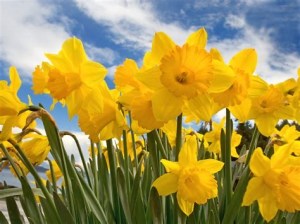
I wandered lonely as a cloud

That floats on high o’er vales and hills,

When all at once I saw a crowd,

A host, of golden daffodils;

Beside the lake, beneath the trees,

Fluttering and dancing in the breeze …

I Wandered Lonely As A Cloud

If we were to just read it for what it basically says we would think he was a lonely man who thought he was a cloud.  And when he saw some flowers he thought they were actually dancing.  Sounds like someone on drugs.  But when we study the poem, we find a beautiful short tale about a man who loves nature and finds joy whenever he sees daffodils. Therein lies the need for great Biblical teachers and pastors. 


As we explore the last chapter of James, we find him being very angry with the wealthy members of the church.  Not because they are wealthy, but just like the ruler Jesus admonished, they have turned their wealth into their god.  They have cheated and lied all in the name of increasing their wealth.  How many of us today covet our bank account in lieu of helping those in need?  As an American, even our poorest are considered wealthy in relation to other countries.  Just having a home, a steady job, owning one or two cars, having three meals a day, a closet full of clothes, a tv and more, far and away exceed what others have.  And none of that is wrong.  James condemns the wrong use of riches – using wealth as a weapon rather than a tool to build others up.  I’ve heard so many people over the years actually worry that Jesus will ask them to give up all their money and become a poor missionary.  I say, if that’s truly what you are worried about then be careful, that just might be what God asks you to do!  

How many times have you heard people say they’re worried God will ask them to be another ‘Mother Teresa?”

James doesn’t stop there.  Our lack of patience, our lies (both little and big), our lazy prayer life, and our lack of desire to help our fellow Christians grow and be their best in the eyes of Christ, are all on display this week in James 5.  

If we aren’t careful so much of James can turn into one of those misused verses or phrases.  If we remember two things as we work on the final week of this study let them be this: 1) it is always about what is in our heart that Jesus cares about and 2) thankfully we are given grace each and every time we confess that we have forgotten the first.

bible study, Christian, Christian Church, christian encouragement, Uncategorized

Rich Man, Poor Man


My husband used to watch The Sopranos religiously.  I for one, have never enjoyed any mob-related tv show or movie.  The reason being is in order for the “Mob” to be successful it requires a willing citizenry to, at best, look away or at its worst, show favoritism.  Never has there been more a blatant example than the Italian Mafia and the Catholic Church.  Until recently the mafia had unfettered access to the church in Italy.  Many priests would almost be part of the “family.”  And why? There lies the question of favoritism.

“My brothers and sisters, believers in our glorious Lord Jesus Christ must not show favoritism.”

James 2:1

James goes on to ask the reader what they would do if you saw a beggar and a rich man enter your church. Who would get the seat of honor?  And why?  It’s typical for churches to seat VIPs front and center.  But did you know churches didn’t have places to sit for about 1,400 years?  During the protestant reformation, churches began selling boxes to the wealthy for them to sit in, along with their families and special guests.  The poor still had to stand at the back.  And of course, there’s the private wings so common throughout Italian churches where wealthy families have their patriarch’s painting and own altar.  It’s as though the entire biblical message about favoritism had been lost.

The underlying theme of favoritism comes down to a perceived value — real or imagined.  Yes, we can say people are afraid of the mob.  But they sure did love the money those mafia families provided the Italian churches and other communities in which they currently operate.   Favoritism also is born of the desire for power or fame.  Which results in, typically, more money.

“Privileged groups work for greater power consolidation through favoritism.”

Bryant McGill, Voice of Reason

In other words, we humans love to have other humans adore us and vice versa.  We favor those we think can provide us more wealth and power.  This is not based on race, color, etc.  If someone has what we desire, we’ll cozy up to them.  It’s not reserved for just adult relationships.  “Stage moms,” “dance moms,” “band dads,” “pool parents” are just some examples of how we adults use children to elevate ourselves.  We make sure our kid is friends with the best athlete on the team so they can be “in.”  Or we just promote our kid to anyone who will listen, thereby rubbing some shine on us. 

Love of wealth can foster the sin of favoritism

The dangers of favoritism and the sins it fosters can been seen throughout the Bible.  Stories of brotherly jealousy (Joseph and that coat!), wives wanting to be favored (Rachael and Leah), kings worried about losing power (Saul vs David) and whole churches fighting over leadership (Corinth) all include favoritism within.  

And yet it’s God’s words that tell us to treat people equally – even our slaves.  We are admonished to “Treat your slaves in the same way (as the slaves are to treat their masters).  Do not threaten them, since you know that he who is both their Master and yours is in heaven and there is no favoritism in him.”  Note, the subject of slavery was different at that time.  Many people sold themselves into slavery to pay off debts or even to be under a “master” who would take care of all their needs.  Even professionals – such as doctors, artists, etc – sometimes made this choice.

The funny thing about God is He is always looking for ways to teach us and get us to see His truth of Love, Mercy and Forgiveness.  Like showing favoritism to a mobster, the true consequences are what we would normally wish to avoid.  Frequently the person or group receiving the favor will then wield that power and authority over you.  We see this when Jesus speaks in the synagogue.

“Beware of the teachers of the Law.  They like to walk around in flowing robes and love to be greeted with respect in the marketplaces and have the most important seats in the synagogues and the places of honor at banquets.”

Luke 20:46

And all the people bowed to them as they walked around like “cock of the walks.”  Showing them favoritism while spitting on Jesus.  But here’s the result:

“They devour widows’ houses and for a show make lengthy prayers.  These men will be punished severely.”

Today we favor celebrities, overlooking all their sins.  For a glance from them some would pay any price.  We favor famous pastors and pretend we don’t see how they twist scripture.  We favor politicians because they know how to say just the right things to make us feel good, even though their years of actions are in direct opposition to us.  We favor certain races because its “socially aware.”  We might favor one of our children or a teacher, a student in our class, a player on the team we coach, or someone with a higher status.  But we must also be aware that favoritism toward what we’d think wouldn’t be in this category is wrong — toward the perceived “lesser.” Those that expend hate for the rich because of a supposed love for the poor are still in the wrong. What they get out of this type of outrage is a sense of piety. Even being a champion of the disabled while having disdain for able-bodied is not equality. It doesn’t matter if the subject of your favoritism is rich, poor, black or white, high or low in status, young or old, the Bible is clear — it’s wrong. The sin comes in what we expect out of that favoritism and what have we done to those “out” of our favor.  It creeps into our lives sometimes without us being fully aware.  And what’s worse, it can bring out hatred. We can feel jealously while still favoring others. People outside our little “clicks” feel left out, ignored or even abused.

“God does not show favoritism.”

Romans 2:11

It reminds me of a children’s book I once read and it helps me to put it all in perspective. It’s a reminder that everyone that day will poop.  A very “undignified” and messy action that everyone, no matter their status, wealth, race, color or creed will undertake.  The pope, the US president, Lebron James, Tom Brady, Oprah, Lionel Messi, Christina Aguilera, the mafia boss, your mayor, your pastor, your mother in law, the homeless person, you.  Everybody poops.  God did that.  I think it’s one of His little winks.

Write down all the people or groups you tend to favor. Pray about how you can flip that script and treat people equally.